Loading…
Rotate for the best fullscreen experience
Concentration, also called Memory or Pelmanism, is a classic card game of memory. All 52 cards lie face down in a grid, and you and the computer take turns flipping two. Same rank and same color is a pair: collect it and flip again. A miss turns back over and passes the turn. When all 26 pairs are gone, whoever has more pairs wins.
At a glance
| Players | 2 |
|---|---|
| Decks | 1 |
| Jokers | No |
| Difficulty | Easy |
| Computer opponents | Yes |
How to play
Cards, opponent and goal
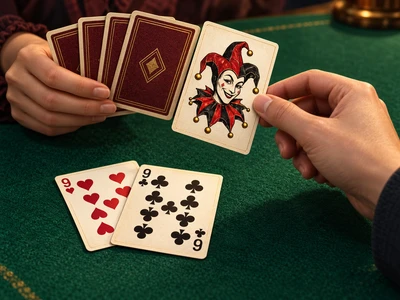
Concentration uses one standard 52-card deck with no Jokers. On this site it is a two-player game between you and one computer opponent, and you always go first.
At the start, all 52 cards are laid face down in a neat grid. Your goal is to collect more pairs than the computer. Every pair depends on remembering where a card was seen and then turning it up together with its partner.
What counts as a pair
On this site a pair is two cards of the same rank and the same color. Hearts and Diamonds are red; Spades and Clubs are black. So:
- 7♥ and 7♦ are a pair (both red sevens).
- 7♠ and 7♣ are a pair (both black sevens).
- 7♥ and 7♠ are not a pair: same rank, but different colors.
- 7♥ and 8♥ are not a pair: same color, but different ranks.
This means every card has exactly one partner in the deck, 26 pairs in all. When you see the Q♣, the only card you need to find is the Q♠.
How the grid is laid out
The 52 positions stay fixed for the whole game. In landscape on a phone and on a computer the grid has 4 rows of 13 cards. In portrait on a phone it has 8 rows grouped into four colored bands of two rows each, with 7 cards in the upper row and 6 in the lower one. One landscape row is exactly one portrait band, and the reading order — left to right, top to bottom — is the same in both.
When a pair is collected its two places stay empty. The other cards never slide over to fill the gap, so the positions you remember stay valid.
A turn
On your turn, flip any face-down card, then flip a second one:
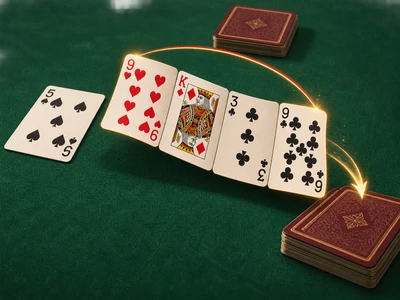
- A pair: the two cards fly to your pile, your pair count goes up by one, the number of pairs left on the table goes down by one, and you flip again. As long as you keep finding pairs, you keep playing.
- No pair: both cards stay face up for a moment so that both players can see them, then they turn back face down and it is the computer's turn. You can tap during this pause to turn them back early.
The computer follows exactly the same rules. You see every card it turns up, and that information helps your memory just as much as your own flips.
For example, you flip the 7♥ and then the 7♦: that is a pair, so you go again. If the second card had been the 7♠, the colors would not match, both cards would turn back over, and the computer would play next.
End of the game and winning
The game ends when all 26 pairs have been collected. When only two cards are left on the table they are always a pair, and whoever is playing at that moment turns them up and takes them.
Have more pairs than the computer and you win; fewer and you lose. Thirteen pairs each is a draw. The result panel shows the final score, for example "You 15 : 11 CPU".
About this game
A classic card game of memory
Concentration goes by many names. In English it is also known as Memory, Pelmanism and simply Pairs; in Japan it is called Shinkei-suijaku, and in Chinese it is often called 对对碰. There are almost no rules to learn: if you can read ranks and tell red from black, you can play a whole game. The real skill is holding on to facts like "the red nine was near the right end of the second row", which makes it a great game for children to practise focus and a quick brain workout for adults.
The rules vary a little from family to family. Some play that any two cards of the same rank make a pair, and some add the Jokers. This site always uses same rank and same color, with no Jokers, so each card has a single partner and you always know exactly what you are looking for.
Concentration is also different from other simple matching games. In Old Maid you draw a hidden card from another player's hand, discard pairs of the same rank, and try not to be left holding the Joker. In Kitten Fishing two players flip the top card of their own piles and capture matching ranks from the table. In Concentration nobody holds a hand: every card is on the table, and the only thing that counts is who remembers better.
Playing on this site
Open the page and play right away — no download and no sign-up. The full game works in portrait and landscape on phones and in desktop browsers.
- Flip a card: on your turn, tap any face-down card. On a computer you can also move around the grid with the arrow keys and press Enter or Space to flip. Your first game shows the hint "Flip two cards: same rank + same color is a pair."
- See what happened: your first card of the turn gets a thin gold outline. A pair shows a message such as "Pair! red 7 · flip again", and a miss explains why, for example "No pair (different color) · CPU's turn". Tapping the card that is already face up, or an empty spot, only shows "This card is already face up" or "That spot is already empty" and never counts as a flip.
- Always in view: both players' pair counts, the number of pairs left and whose turn it is are shown on the table at all times, and the player in the lead is marked.
- The computer's turn: the CPU pauses briefly and then flips its cards one at a time, and the status line names each card it turns up so you can remember it too. Tapping a card meanwhile only shows "Wait for the CPU to finish".
- Speed up animations: the deal can be skipped with Skip. While an animation is playing, a tap only finishes it at once — it never flips an extra card.
- Choose a difficulty: the menu offers Easy, Normal and Hard. The difficulty is the computer's memory, and a new setting applies from the next game. Normal is the default.
- End and restart: the result panel shows a win, loss or draw with the score. Press Play again to start straight away. Choosing New game from the menu in the middle of a game asks you to confirm once.
- Autosave: refresh the page, rotate your phone or enter and leave fullscreen, and the game continues where it left off, including a first card you have already turned up. After rotating, a note says "Layout changed: same order, one landscape row = two portrait rows".
There is no undo and no hint. Undo would let you look at a card and then change your choice, and a hint would do the remembering for you — either one would take the point out of Concentration.
The computer's three memory levels
The computer only uses cards that have already been turned face up. It never peeks at face-down cards. The three levels differ only in how much it remembers:
- Easy: remembers only the last 4 cards turned up, so it soon forgets older positions.
- Normal: remembers the last 12 cards turned up.
- Hard: remembers the last 20 cards turned up, far more than Normal, but it still forgets positions seen long ago.
Each turn the computer collects a complete pair from memory if it knows one. Otherwise it flips a card nobody has seen yet, and if that card's partner is in its memory, it flips the partner next.
Memory tips
Open with a new card. Make your first flip a card that has never been seen. If you already know where its partner is, your second flip completes the pair.
Your opponent's flips count too. Every card the computer turns up and puts back is free information. When the computer misses, it is often handing you your next pair.
The second card does not have to be new. If your first card is new and you do not know where its partner is, flipping a card you have already seen as your second card avoids showing the computer a fresh position for nothing.
Remember bands and colors. "The black Jack at the right of the third band" sticks better than a rank alone. Near the end, counting which ranks are still missing helps you rule positions out.
A game takes a few minutes. When both players remember well, a game usually takes 80 to 100 flips. On Hard, even a player with a sharp memory has to keep careful track of the cards to win, and a result arrives within a few minutes.
Concentration · FAQ
How do you play Concentration?
All 52 cards are laid face down in a grid, and you and the computer take turns flipping two. Two cards of the same rank and color are a pair: you collect them and flip again. If they do not match they turn back over and the other player goes. When all 26 pairs are taken, the player with more pairs wins.
Which two cards make a pair in Concentration?
Two cards of the same rank and the same color, such as 7♥ and 7♦ or K♠ and K♣. The 7♥ and 7♠ share a rank but one is red and one is black, so they are not a pair. Every card has exactly one partner in the deck.
How many pairs are there in a game of Concentration?
Twenty-six. The game uses one 52-card deck without Jokers. The number of pairs still on the table is always shown, and the last two cards are always a pair.
Do you get another turn after a match in Concentration?
Yes. After a pair the same player flips two more cards straight away, and keeps going for as long as they keep finding pairs. Only a miss passes the turn to the other player.
How do you win at Concentration?
When all 26 pairs have been collected, whoever has more pairs wins. If you each have 13 pairs, the game is a draw.
Does the computer cheat in Concentration?
No. The computer only uses cards that have been turned face up. The three levels only change how much it remembers: Easy recalls the last 4 cards turned up, Normal the last 12, and Hard the last 20.
What is the best strategy for Concentration?
Flip a new card first each turn and take the pair if you know where its partner is, and watch every card the computer turns up. When you do not know the partner, flip an already-seen card second so you give your opponent less new information.
Do the cards move when I rotate my phone in Concentration?
The order never changes, only the arrangement. Landscape shows 4 rows of 13; portrait folds each landscape row into a band of two rows. Your game, including any card already face up, is kept.
Is Memory the same game as Concentration?
Yes. Memory, Pelmanism and Pairs are other names for Concentration, and in Japan it is called Shinkei-suijaku. Families differ on what makes a pair; this site uses same rank and same color.
Can you undo a flip or get a hint in Concentration?
No. Undo would let you choose again after seeing a card, and a hint would do the remembering for you, so neither fits a game that is all about memory.
What is the difference between Concentration and Old Maid?
In Concentration every card lies face down on the table and you win by remembering positions and collecting more pairs. In Old Maid you draw blind from another player's hand, discard same-rank pairs, and lose if you are left holding the Joker, so it is mostly luck.