
Loading…
Rotate for the best fullscreen experience
Spider Solitaire (4 Suits) is the full, standard game: 104 cards from two decks, with 26 each of spades, hearts, diamonds and clubs. Ten columns hold 54 cards, only the bottom card of each face up. You stack down by rank in any suit, but only a same-suit run moves as one piece, and only a same-suit King-to-Ace run of 13 is taken away. Clear 2 sets of every suit to win.
At a glance
| Players | 1 |
|---|---|
| Decks | 2 |
| Jokers | No |
| Difficulty | Hard |
| Computer opponents | No |
How to play
The deck, the deal and the table
Spider Solitaire (4 Suits) uses two standard 52-card decks, 104 cards in total, with no jokers, and every suit takes part: spades ♠, hearts ♥, diamonds ♦ and clubs ♣, 26 cards of each. That makes two complete A-to-K sets per suit. Ranks count as A=1, 2 to 10 at face value, J=11, Q=12 and K=13.
Every face-up card shows both its rank and its suit symbol in the corner, and in this version the symbol really matters. Spades and clubs are both black, hearts and diamonds are both red, so the same colour does not mean the same suit. 8♠ and 7♣ look like a black pair, but under the rules they are two different suits. Read the ♠ ♣ ♥ ♦ symbols; colour is only a quick aid.
The deal puts 54 cards into ten columns: the first four columns get 6 cards each and the remaining six columns get 5 cards each. Only the last card of each column is dealt face up; everything above it is a face-down card whose rank and suit you cannot read yet. So a new game starts with exactly 10 cards visible and 44 face-down cards on the table.
The other 50 cards stay in the deck at the side of the table, and they leave it ten at a time, one card per column, over five deals. The status area shows how many deals are left, how many sets you have cleared out of 8, how many face-down cards are still on the table, your move count and your time. The foundation row marks each cleared set with its suit symbol. Nothing here is a timer counting against you — it is simply a record of the deal.
Stacking ignores suit, moving a run does not
There are only two kinds of move in the whole game: move cards between columns, or deal a row.
Inside a column you build down by rank, and the suit does not matter for stacking: any card may be placed on a card exactly one rank higher. 7♦ may go on 8♠, 7♣ may go on 8♥, 7♣ may go on 8♠, and any Q may go on any K. The top card of any column can always be picked up on its own.
Moving several cards at once is stricter. They must form a same-suit run in unbroken descending order. 8♦ 7♦ 6♦ is a run and can travel as one unit onto any 9 or into an empty column. 8♠ 7♣ is in rank order and both cards are black, yet it mixes two suits, so it cannot move together — you have to move the 7♣ away by itself first. The same goes for 8♥ 7♦. Placing a card on another suit is always legal, but from then on those cards no longer move as one block, and they have to be taken apart card by card later.
With every suit in the deck, same-suit runs tend to be short: the card you want to build on is usually in another suit. That is exactly what makes this version the hardest one.
An empty column is the most valuable thing on the table. Any card, or any same-suit run you are allowed to move, can be placed into an empty column — no particular rank or suit is required to start it. That freedom is also a trap, because of the deal rule below.
When you move cards away and leave a face-down card on top of a column, that card turns over at once and joins the game. Revealing face-down cards is how the deal opens up, and the counter in the status area drops by one each time.
Dealing a row from the deck
When you run out of useful moves, you can deal a row: the deck puts one card face up on every one of the ten columns at once. Five deals are available, and the number remaining is shown next to the deck.
Two conditions apply. You cannot deal a row while any column is empty — every empty column must be filled first, which is why spending an empty column carelessly can cost you the rest of the game. And once all five deals are gone, the deck is empty, the button is greyed out, and it says plainly that there are no cards left to deal. A dealt row lands on top of whatever you have built, in whatever suit it happens to be, so it often breaks a same-suit run in two; choosing the moment for it is one of the central decisions of the game.
Completing a same-suit set from King to Ace
The goal of every column is a run of thirteen cards of one suit from K down to A. The moment such a run appears in a column, those 13 cards leave the table on their own and travel to one of the eight foundation places, and the counter moves to "Sets N/8"; the foundation row and the announcement both say which suit the set was, for example "Cleared a ♣ set, 3/8". You never have to collect a set yourself, and a set that has gone to a foundation never comes back into play.
Note that a K-to-A column that mixes suits is not taken away, even if the odd card out has the same colour — a single club inside a run of spades is enough to stop it. Only thirteen cards of one suit in unbroken order count as a set.
Each suit has two sets, and eight sets of thirteen cards make 104, so clearing two sets each of spades, hearts, diamonds and clubs empties the table and wins the game. Because the eight sets use every card, all five deals must be dealt before the last set can be completed.
Controls: tap, drag and the segment picker
Three ways to move cards exist, and one press can only ever be one of them.
- Tap a face-up card and the run from that card to the bottom of the column is moved immediately to the best available target. The choice is fixed and predictable: a target that completes a same-suit King-to-Ace set at once, then a card of the same suit one rank higher, then any other legal non-empty column (a card of another suit), and only then an empty column, with the lowest-numbered column breaking a tie. If 7♣ could go on either 8♠ or 8♣, a tap picks 8♣. Nothing is selected and nothing waits for a second tap. If the card you tap has a card of another suit below it, the cards from there down are not a same-suit run, so nothing moves and a short line tells you that only a same-suit run in order can move together — tap the first card of the same-suit part further down instead.
- Drag a card and its run follows your finger or pointer; drop it on the column you want. Dragging is the most direct way to put a card on another suit on purpose. If the drop is not legal, the cards spring back and the position is unchanged.
- Press and hold a column (or right-click it, or move focus to it with the keyboard and press Enter) to open the segment picker. This overlay enlarges the column so you can read the rank and suit of every face-up card in it one by one, lets you choose with ▲ and ▼ how many cards to take from the bottom of the column — it only stops on runs that can actually move — and lists every legal target, marking the ones that would complete a set and any empty column. Long lists of targets are paged rather than trimmed, so nothing is hidden from you. Confirm to move; cancel, Esc or a tap outside changes nothing.
The segment picker is also the answer to long columns. When all the suits alternate down a column, it can grow past twenty cards without a single run you could group together. On a phone the cards in such a column have to overlap tightly; when that happens the column is marked as dense, the bottom card stays fully readable, and the picker always shows the rest at full size, rank and suit included.
Illegal actions never change the position and never pass silently: moving a block that mixes suits (including two suits of the same colour) or has a gap in it, dropping a card on a rank that does not fit, or tapping the deck while a column is empty or after the last deal each bounce back with a short line saying why.
Undo, hints and the end of a deal
Undo is unlimited and covers everything: an ordinary move, a dealt row (the ten cards go back on the deck in order), and even a completed set, which returns to its column. If a move had turned a card face up, undoing it covers that card again, because that is the true state of the table. One thing never rolls back: what you have seen. A card that has once been face up is treated as known for the rest of the game, so hints never become more cautious than your own memory.
The hint button suggests a move worth making, in a fixed order of usefulness: first a move that turns over face-down cards, then one that empties a column, then one that completes a same-suit set, then one that joins loose cards into a longer same-suit run without breaking one you already have. Putting a card on another suit does not count as progress, same colour or not, so if all that is left is that kind of stacking and shuffling back and forth, the hint says so — there is no progress to be made on the table — and points you at the next real step: deal a row, or fill the empty column first and then deal, or undo a few moves and try another line. With all the suits in play this happens often; it is a nudge, not a defeat.
There is one deliberate restraint. While any face-down card or any card still in the deck has not been seen, the game will never tell you the deal is lost, because it will not look at cards you have not seen. Only when everything is known — no face-down cards left and the deck empty — can a hint state that this deal cannot be finished from here, and even then it only appears as a bar with a way out (replay the same deal or take a new one, with undo and hint still on the table). It never ends your game for you. While the search is running the bar shows a checking state and the table stays fully responsive; if the search runs out of budget you get an ordinary suggestion instead of a false verdict.
If the deck is empty and no legal move exists at all, the deal really is over and the result panel says so, offering to undo the last move, replay the same deal or start a new one. That ending is rare: as long as the deck still holds cards and no column is empty, dealing a row is always a legal move.
When you clear the eighth set, the result panel reports your time, your moves, how many sets of each suit you cleared (shown as "♠ 2 · ♥ 2 · ♦ 2 · ♣ 2 (8/8)"), and the deal identifier, which you can copy with a tap and use to replay the very same cards. The keyboard covers the whole game too: U undoes, H asks for a hint, N starts a new deal and D deals a row; the left and right arrow keys move focus between columns, Enter or Space opens the segment picker on the focused column, the arrow keys choose the run and the target inside it, and Esc closes it.
About this game
Spider as it was first played
Spider is one of the great two-deck patience games, named after the eight legs of a spider — the eight sets you have to build. It reached a huge audience when it was bundled with desktop operating systems in the 1990s, and it has been at or near the top of every list of played solitaire games ever since.
The game was designed for two full decks with every suit, and that is still what many players mean by Classic Spider Solitaire. The one-suit and two-suit versions came later as gentler ways in. Spider 4 Suits is the original and the toughest of the three; the classic desktop version labelled it Difficult.
What playing with every suit changes
With one suit, every unbroken descending block on the table is a run you can carry anywhere. With spades and hearts, red and black at least tell the two suits apart at a glance. With all 4 suits, two things get harder at once.
First, same-suit runs are short. Each rank has eight cards, but only two of them share a suit with the card you are holding, and those two are often still buried under face-down cards. Most of the time the card you can reach is in another suit. Every off-suit placement is a small loan: it can free a card or turn over a face-down card right now, but it leaves a join in the column that you will have to undo card by card later.
Second, colour stops helping. Spades and clubs are both black, hearts and diamonds both red, so a block that looks connected at a glance may split right between a ♠ and a ♣. Checking the suit symbol becomes a habit.
So the real question in Spider Solitaire (4 Suits) is patience and timing. Which column should be kept pure so that one suit can grow toward King-to-Ace, and which one is just a workspace? Is it better to stack off-suit now, or to deal a row and hope for a better card? Not a single rule is added compared with the easier versions — you simply have every suit to keep an eye on.
How it differs from other solitaire games
Klondike and FreeCell both ask you to build alternating red-and-black sequences and to move cards onto foundations one rank at a time. Spider works the other way around: stacking ignores colour entirely, and a set leaves the table only when all thirteen cards of one suit are already stacked in one column in order. There is no foundation to feed card by card; everything happens in the ten columns.
The second difference is the deck. In Klondike you turn the stock card by card and can usually try again; here the deck arrives in five sudden batches of ten that land on every column at once, including the ones you were carefully building. Planning around those five moments is the skill of the game.
The third difference is how much you cannot see. A Spider deal starts with 44 face-down cards plus 50 cards still in the deck, so you begin knowing just ten of 104 cards. Every card you turn over changes the plan, which is why a deal rewards patience and why undo exists.
Strategy tips
- Turn over face-down cards first. A move that reveals a new card is almost always worth more than a tidy-looking move that reveals nothing. Empty columns and long runs come from information.
- Read the symbol, not the colour. ♠ and ♣, ♥ and ♦ share a colour, and that is the easiest way to think a run is connected when it is not. Check the corner before you move.
- Prefer the same suit when you have a choice. A card often has several possible homes. Take the one in its own suit, and the run you are building can still move later.
- Use off-suit stacking as a workspace, not a plan. Putting a card on another suit to free a face-down card or empty a column is fine; just remember the run is now broken, and do not keep piling long runs beneath it.
- Keep an empty column empty for as long as you can. It is your only workspace and the only way to take apart a column where the suits alternate, and with every suit in play it is worth more than ever. Remember that you must fill it again before you can deal a row.
- Focus on one or two suits. Spreading all of them everywhere makes it hard to finish any set. Let one column run all the way down in a single suit; the first cleared set gives the whole table room to breathe.
- Do not bury a King. A K can only ever start a run, never sit on another card, so a K with cards piled on top of it is dead weight until you clear it.
- Before you deal a row, tidy up. The ten new cards land on your column tops in any suit and will break any run that is not already complete, so square the table away first.
- Undo instead of grinding. Undo is unlimited and covers dealt rows as well, so stepping back to the point where the position went wrong costs you nothing but time.
Is every deal winnable?
No, and of the three versions this is the one where that is most true. Spider 4 Suits is the hardest form of the game; even experienced players lose many deals, and there is no way to know at the start which ones cannot be finished. That is normal and not a reflection of your play. The exits are always available: undo as far back as you like, replay the same cards with a clearer plan, or start a new deal. A deal usually takes somewhere between fifteen and forty minutes, the clock pauses when you switch tabs, and rotating your phone, resizing the window or going full screen all keep the current game exactly as it stands.
Spider Solitaire (4 Suits) · FAQ
What are the rules of Spider Solitaire (4 Suits)?
Two 52-card decks' worth of cards are used, 104 in total, with 26 each of spades, hearts, diamonds and clubs. Fifty-four cards go into ten columns — six in each of the first four columns, five in the rest — with only the bottom card of each column face up. You build down by rank regardless of suit, move only same-suit runs together, and fill an empty column with any card or movable run. The remaining 50 cards are dealt ten at a time in five rounds, never while a column is empty. A same-suit K-to-A run of thirteen cards leaves the table automatically, and clearing two sets of every suit, 8 in all, wins.
Can I put a club on a spade in Spider Solitaire?
Yes. Stacking only looks at rank, so any card may go on a card one rank higher: 7♣ on 8♠, 7♦ on 8♥ and 7♥ on 8♣ are all legal. The catch is that the two cards are different suits, so they cannot move together afterwards and do not count toward the same King-to-Ace set.
Why can't I move a black run in Spider 4 Suits?
Because the block mixes spades and clubs, or has a gap in its ranks. Spades and clubs share a colour but are different suits; only cards of one suit in unbroken descending order move as a unit, such as 9♣ 8♣ 7♣. With 9♠ 8♣ 7♣ you can move 8♣ 7♣ together, but the 9♠ stays behind. A tap tells you the reason, and the segment picker only lets you choose runs that can actually move.
Why wasn't my King-to-Ace column removed in Spider Solitaire?
Because the thirteen cards include more than one suit, even if the odd card has the same colour. A set is taken away only when all thirteen are the same suit, from K down to A without a gap. Replace the off-suit card with one of the matching suit and the set leaves the table at once.
Why can't I deal a row in Spider Solitaire?
Because a column is empty, or the deck has run out. Every one of the ten columns must hold at least one card before the deck may deal a row, so fill the empty column first. When all five deals are spent, the deck button is greyed out and says there is nothing left to deal.
Can any card go into an empty column in Spider 4 Suits?
Yes. Any single card or any movable same-suit run may go into an empty column; no particular rank or suit is required to start one. Think of it as your workspace, but remember that while it stands empty you cannot deal a row.
Why is Spider Solitaire (4 Suits) harder than 2 suits?
Because same-suit runs are shorter and colour no longer tells suits apart. Only two of the eight cards of each rank match your suit, and they are often still face-down; meanwhile a black or red block can hide a change of suit. The hidden cards and the five dealt rows are the same in every version — the extra challenge is juggling all the suits at once.
Can every Classic Spider Solitaire deal be won?
No. It is the hardest version of Spider, and some deals cannot be finished no matter how well you play, with nothing to show that at the start. Unlimited undo, replaying the same cards and starting a new deal are all one tap away, so a bad deal costs you nothing.
Will a hint tell me a Spider Solitaire deal has no solution?
Only when it can genuinely know. While any face-down card remains on the table or any card in the deck has not been seen, hints stick to advice about what is visible, and say there is no progress left rather than claiming defeat. Once every card is known, a hint may state that the deal cannot be finished from here and offer to replay the same cards or deal new ones.
How do I tell spades from clubs in Spider 4 Suits on a phone?
Look at the suit symbol in the corner of each face-up card: ♠ and ♣ have different shapes even though both are black. When a long column is packed too tightly, press and hold it to open the segment picker, which enlarges the column and shows every card's rank and suit; cleared sets are also marked with their suit symbol in the foundation row.
Related games
Spider Solitaire (1 Suit)
Spider Solitaire (1 Suit) is a one-player card game played with two 52-card decks in which every…
Spider Solitaire (2 Suits)
Spider Solitaire (2 Suits) is a one-player card game played with 104 cards in just spades and…
FreeCell Solitaire
FreeCell Solitaire is a one-player card game played with a single 52-card deck, dealt face up into…
Klondike Solitaire (Turn 1)
Klondike (Turn 1) is the classic single-player solitaire played with one 52-card deck.
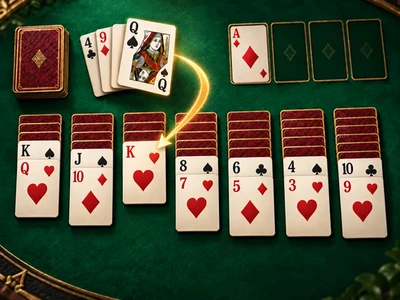
Klondike Solitaire (Turn 3)
Klondike Solitaire (Turn 3) is the draw-three version of the classic one-player card game, played…
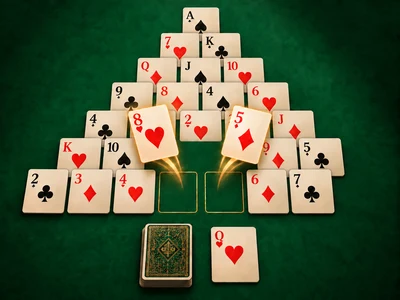
Pyramid Solitaire
Pyramid Solitaire is a one-player game played with a single 52-card deck.
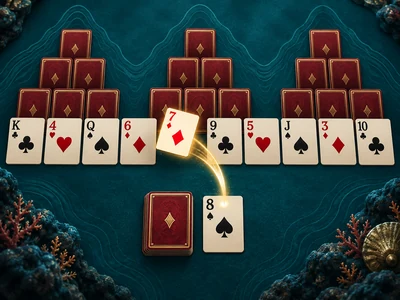
TriPeaks Solitaire
TriPeaks Solitaire is a one-player card game played with a single 52-card deck.